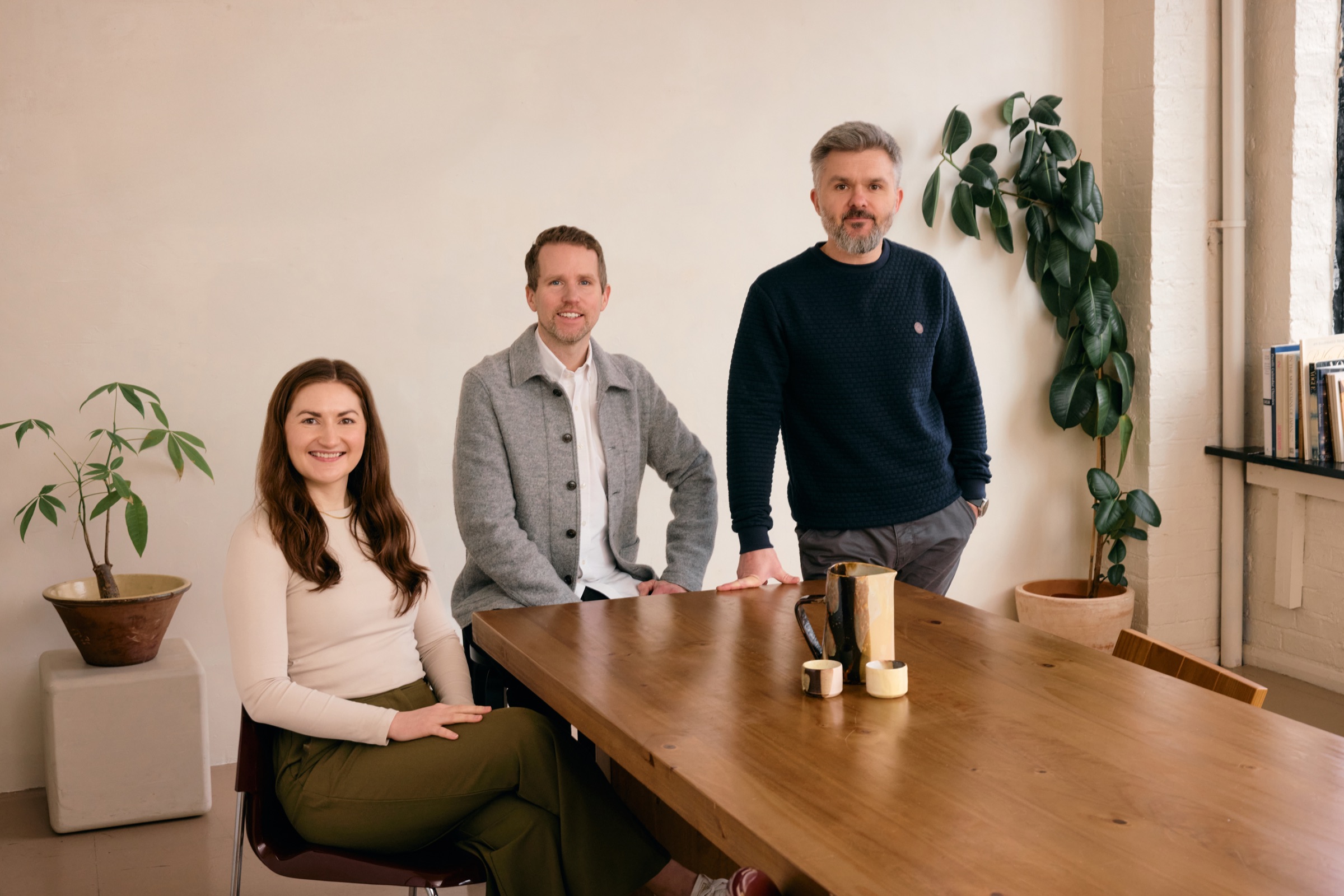
Are your products optimized for humans or AI? Today we're announcing a $3 million (SEK 30 million) seed round to make them work for both. The round is led by Industrifonden, with Luminar Ventures, Foundry Ventures, Ventures Together and Inovexus.
A year ago we launched our product with a simple belief. People would start asking AI assistants what to buy, and the brands that optimized their products for this new way of searching would get recommended. Here's what we've learned since, and what comes next.
Why now: we're at the tipping point
More and more people ask ChatGPT, Gemini or Perplexity what to buy. They don't search for a product name. They ask things like "a gift for a dad who likes hiking" and let the assistant suggest options.
Three in four consumers are ready to let AI handle everyday purchases. Yet fewer than 1 in 10 brands have products optimized for what those shoppers actually need. According to Bain & Company, around 60% of searches already end without a visit to another website, and McKinsey estimates that AI agents could facilitate $3-5 trillion in global commerce by 2030.
The problem is that most product information is still written for people. Lifestyle photos, models and brand stories do the heavy lifting. AI agents don't shop that way. They look at what a product does, what it costs and what customers say about it. Without that detail, good products simply don't get recommended.
Our CEO Erik Wikander has seen a shift like this before. As CMO at Lendify, he moved budget from paid ads to SEO, and within a year 90% of new customers came through organic search. When people started using ChatGPT to find products, he recognised the same pattern.
What we do: Agentic Product Optimization
We saw a missing category: the optimization layer between product data systems like your PIM and your marketing channels. That's where Wilgot sits.
Our system, Agentic Product Optimization (APO), turns a brand's own data into product content that performs:
- Most brands sit on the answers already, they just never reach the product page. Search queries, click-through and conversion rates, reviews, customer service tickets and returns tell us why people buy a product, or send it back.
- It turns those insights into content AI can use. Product pages, feeds, FAQs and structured data that explain what a product does, who it's for and why someone would choose it, in more than 100 languages.
- It keeps improving. It learns from what gets clicked, recommended and bought, and keeps improving every product from there.
For Daniel Wellington, that meant 20% more net sales on optimized products. At Myrqvist, 7% of customers now arrive via ChatGPT.
Today we work with some of the largest D2C brands in Europe. The best proof it works is what customers do next: most of our revenue growth comes from existing customers expanding, based on tangible results and ROI.
"Brands already have a wealth of information about why customers choose their products, but very little of it reaches AI assistants. We're changing that, so brands can compete on the strength of their products, not the size of their advertising budgets."
Erik Wikander, co-founder and CEO
What the funding is for, and what we hope to achieve
The funding lets us build the category we saw was missing. It goes to three things:
- Building the platform. We'll expand what APO can do as AI agents take a bigger role in how people discover and buy products.
- Growing the team and go-to-market. We'll bring Wilgot to more enterprise and fast-growing challenger brands, in Sweden and internationally.
- Building the APO category. We want to be the optimization layer every brand needs between its product data and the channels where people shop.
Our hope is simple: that the best products win, not the biggest ad budgets. If an AI assistant can't understand a product, it can't recommend it, however good it is. We want every brand we work with to be found, understood and chosen, by humans and AI alike.
"Commerce is moving from clicks to conversations, and that will reshape who wins online. Wilgot gives brands of every size a way to compete on relevance rather than ad spend. We back Nordic founders with the ambition to define a category, and Erik and the team have done exactly that with APO."
Andreas Söneby, Industrifonden
The people behind the round
We're excited to have Andreas Söneby (Industrifonden) join our board alongside Anders Nygren (Foundry Ventures).
We're also proud to welcome some amazing angel investors to the round:
- Johan Bäckarlin and Johan Hjelte, founders of Voyado
- Niclas Mollin, founder of inriver and Occtoo
They join the round alongside existing investors such as Fredrik Posse, Alfred Ruth, Carl Bjerkne and Sebastian Bond, and angel collectives like Ventures Together from the UK and Inovexus from France.
Thank you
To our investors: thank you for believing in us and in APO. To our customers: thank you for building this with us and for letting us share your results.
Most of all, we're grateful for the team we’ve managed to assemble at Wilgot, building this with us everyday.
A year ago we bet that products would need to work for both humans and AI. The bet was right, and we're just getting started.
Do you know how your products perform when shoppers ask AI assistants? Get in touch and we'll show you.
See media coverage here
- Breakit: Wilgot vill få ChatGPT att välja dina produkter – tar in 30 miljoner
- Tech Funding News: Industrifonden backs Stockholm’s Wilgot with $3M to win agentic commerce for brands
- CMOtech UK: Wilgot raises USD $3 million to boost AI shopping search
- eCommerceNews: Wilgot raises USD $3 million to boost AI shopping search